The Role of AI in the Oil and Gas Value Chain – Midstream and Downstream Segment
November 20, 2025
Part 1 of this series focused on potential applications of artificial intelligence (AI) within the “upstream” segment and how it optimizes field development from exploration to production. Part 2 will explore how AI is being incorporated in the midstream and downstream segments to enhance operational productivity, efficiency, and profitability.
Midstream operations involve the processing, storage, and transportation of raw crude oil, natural gas, and natural gas liquids from oil fields to refineries and end-users. This segment plays a vital role in energy operations by treating crude oil to remove waste and compressing gas before transporting it to the markets downstream. In the United States, this transportation of oil and gas via interstate pipelines is governed by policies created by the Federal Energy Regulatory Commission.
Downstream operations focus on refining oil, manufacturing petrochemicals, and marketing and distributing refined products and natural gas to end-users. In the downstream phase, the crude oil is refined into diesel, jet fuel, gasoline, and other fuels for use in vehicles, airplanes, and homes, among other uses. End-users include power plants, export facilities, factories, homes, gas stations, etc.
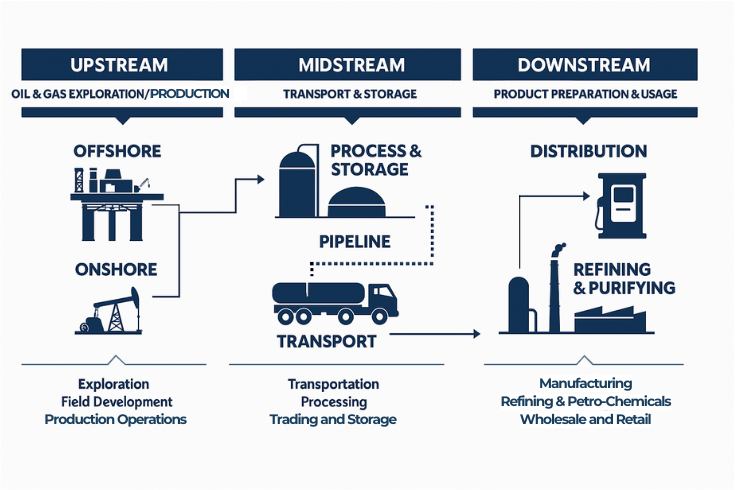
How is AI utilized in the “midstream” segment?
Across midstream operations, AI technologies are being utilized to capture data at various stages to optimize transport operations including pipeline and secondary logistics. In the past, conventional sensors attached at storage could only detect pressure, speed, and temperature; but with AI-based sensing tools, operators can now use this data to predict the corrosion coefficient (the level of corrosion resulting from environmental and operational use) which is helpful in effective predictive maintenance. These AI-sensing tools identify concentrations of different chemical elements stored in a tank – the resulting data is fed to a machine learning (ML) model to evaluate the impact of those elements on the health and durability of the tank and help prevent accidents.


As we move forward, the integration of AI will continue to unlock new levels of operational intelligence, positioning the industry for smarter, more resilient, and more sustainable growth.
Be sure to keep an eye out for Part 3 of this series, where I will explore how the implementation of AI can contribute to the reduction of the carbon footprint and the improvement of sustainability in the Oil and Gas industry.
Until then, learn more about how Citation Manage™ can help simplify your compliance, whether you’re dealing with co-generation facilities or upstream and downstream oil and gas development and refining.
With Citation Manage™ you can perform an applicability assessment to identify requirements from federal, state, and international laws and regulations that are relevant to your operations. With this data you can now complete your compliance calendar to track upcoming deadlines, assign tasks and responsibilities to individuals or teams, and prioritize compliance activities based on this applicability screening and associated risk matrix. This ensures nothing is overlooked, deadlines are met, and resources are allocated effectively.
Learn more about the platform and its features.